Nine places, one Pisa Card: museums, collections and cultural routes to discover
From ancient Egypt to medieval art, from Roman ships and the Arno riverfronts to the Walls of Pisa and the Certosa of Calci: discover the nine cultural sites included in the Pisa Card.
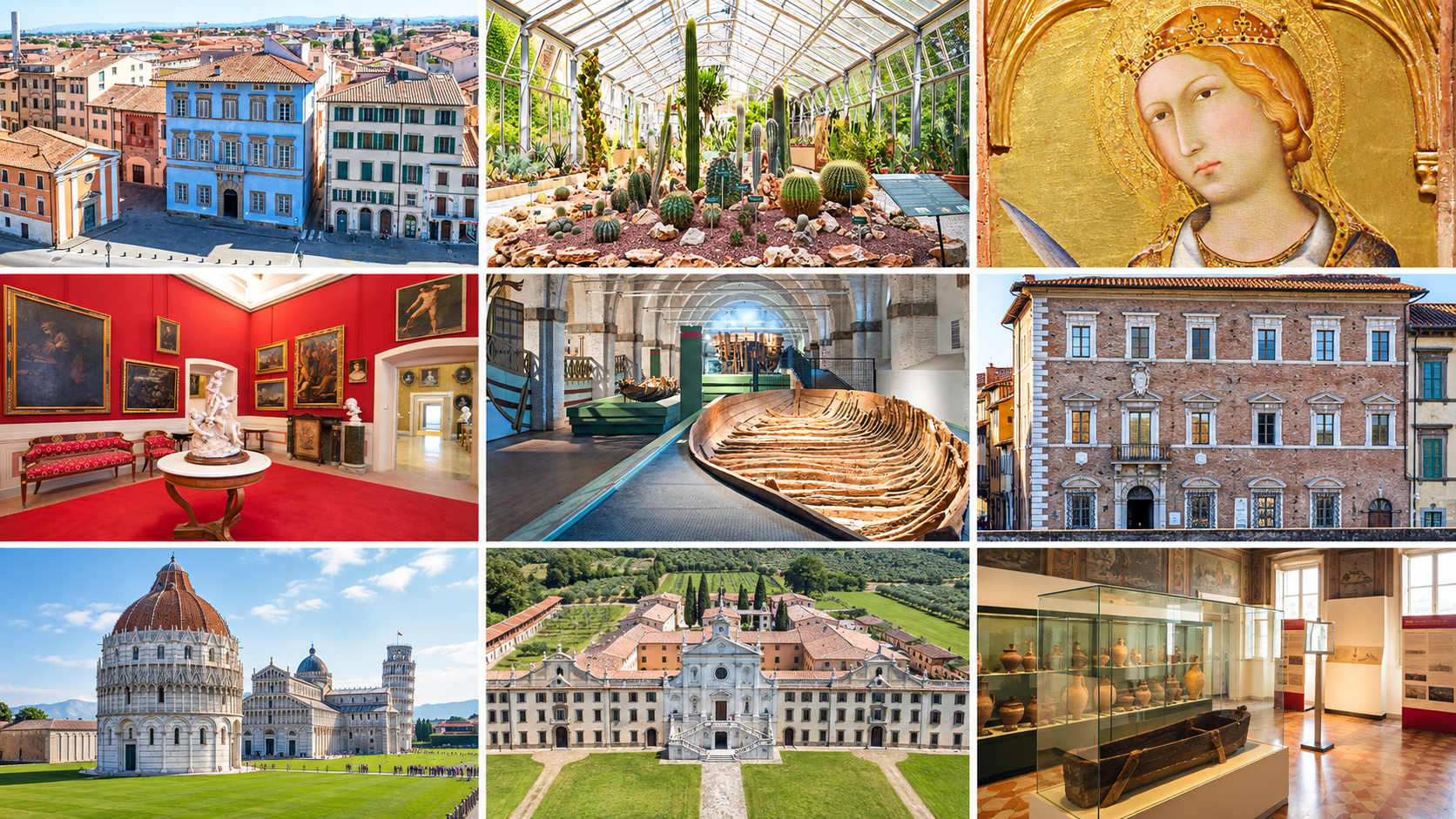
The Pisa Card brings together nine very different cultural sites, allowing visitors to create a personal journey through history, art, archaeology, nature and the urban landscape.
The circuit is not made up of museums alone. Alongside collections and exhibition spaces, it includes a historic botanical garden, a monumental complex and the Walls of Pisa, which are a panoramic route through the city rather than a museum.
Edda Bresciani Egyptian Collections
The Egyptian Collections of the University of Pisa preserve important artefacts connected with the history of ancient Egypt and Nubia.
Named after the Egyptologist Edda Bresciani, they include materials from excavations supported by the University of Pisa, historic collections and evidence documenting the origins and development of Italian Egyptology.
Museum of Graphic Arts
Housed in the sixteenth-century Palazzo Lanfranchi and overlooking Lungarno Galileo Galilei, the Museum of Graphic Arts preserves the collections of the University of Pisa’s Department of Drawings and Prints.
Its holdings include more than three thousand works and important collections of drawings, engravings and contemporary graphic art, presented through rotating displays and temporary exhibitions.
National Museum of San Matteo
The National Museum of San Matteo presents the artistic history of Pisa from the Middle Ages to the modern period.
Its collections include sculptures, paintings, illuminated manuscripts, ceramics, coins and works originally created for the city’s churches and monasteries. The itinerary features major masters of medieval and fifteenth-century Italian art.
Museum of the Ancient Ships
The Medici Arsenals house Roman vessels and thousands of archaeological finds discovered from 1998 onwards in the Pisa San Rossore area.
The ships, objects used on board and other finds tell the story of a thousand years of trade, Mediterranean routes, navigation, shipwrecks and the everyday lives of sailors.
Botanical Garden and Museum
Just a short walk from Piazza del Duomo stands the Botanical Garden and Museum of the University of Pisa, the first university botanical garden to be founded.
Its collections include plants from five continents, Mediterranean species, succulents, aquatic plants and centuries-old trees. It is a place where scientific research, history and nature come together in the heart of Pisa.
Royal Palace
Overlooking Lungarno Pacinotti, the Royal Palace was built in the late sixteenth century for Francesco I de’ Medici.
The museum tells the story of court collecting under the Medici, Habsburg-Lorraine and Savoy dynasties. Its historic rooms contain paintings, tapestries, weapons connected with the Gioco del Ponte, private collections and works documenting Pisa’s political and cultural history.
Palazzo Blu
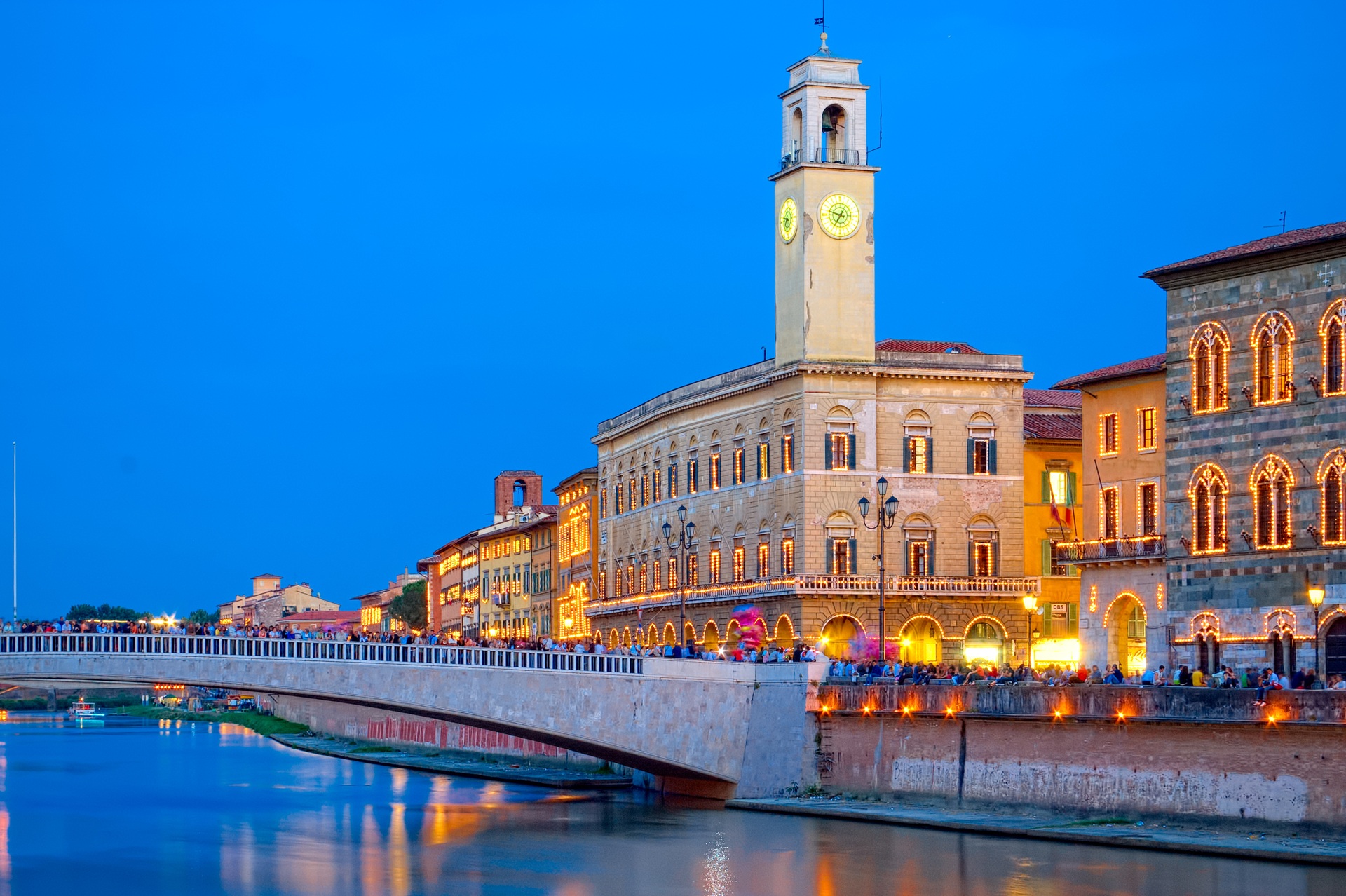
Palazzo Blu is one of Pisa’s leading exhibition and cultural centres. The historic building on Lungarno Gambacorti houses a permanent collection, temporary exhibition areas, an auditorium and a programme of educational, musical and cultural activities.
The Pisa Card grants access to the permanent exhibition; temporary exhibitions may have separate admission conditions and tickets.
Walls of Pisa
The Walls of Pisa are not a museum, but a monumental panoramic route extending for more than three kilometres.
The walkway connects Piazza dei Miracoli with the Arno riverfronts and offers unusual views of monuments, green spaces, streets and lesser-known parts of the city.
Monumental Complex of the Certosa of Calci
Outside Pisa city centre, the Certosa of Calci offers a journey through monastic life, art and architecture.
Founded in 1366 as a monastery of the Carthusian order, its present appearance reflects major seventeenth- and eighteenth-century transformations. Frescoes, stucco decorations, furnishings and monumental spaces make it one of Tuscany’s outstanding examples of Baroque architecture.
One card, many ways to experience Pisa
The nine Pisa Card locations offer a journey through very different periods and themes:
• ancient civilisations and archaeology;
• medieval, modern and contemporary art;
• court history and collecting;
• nature and botanical research;
• monumental architecture;
• urban landscapes and panoramic views.
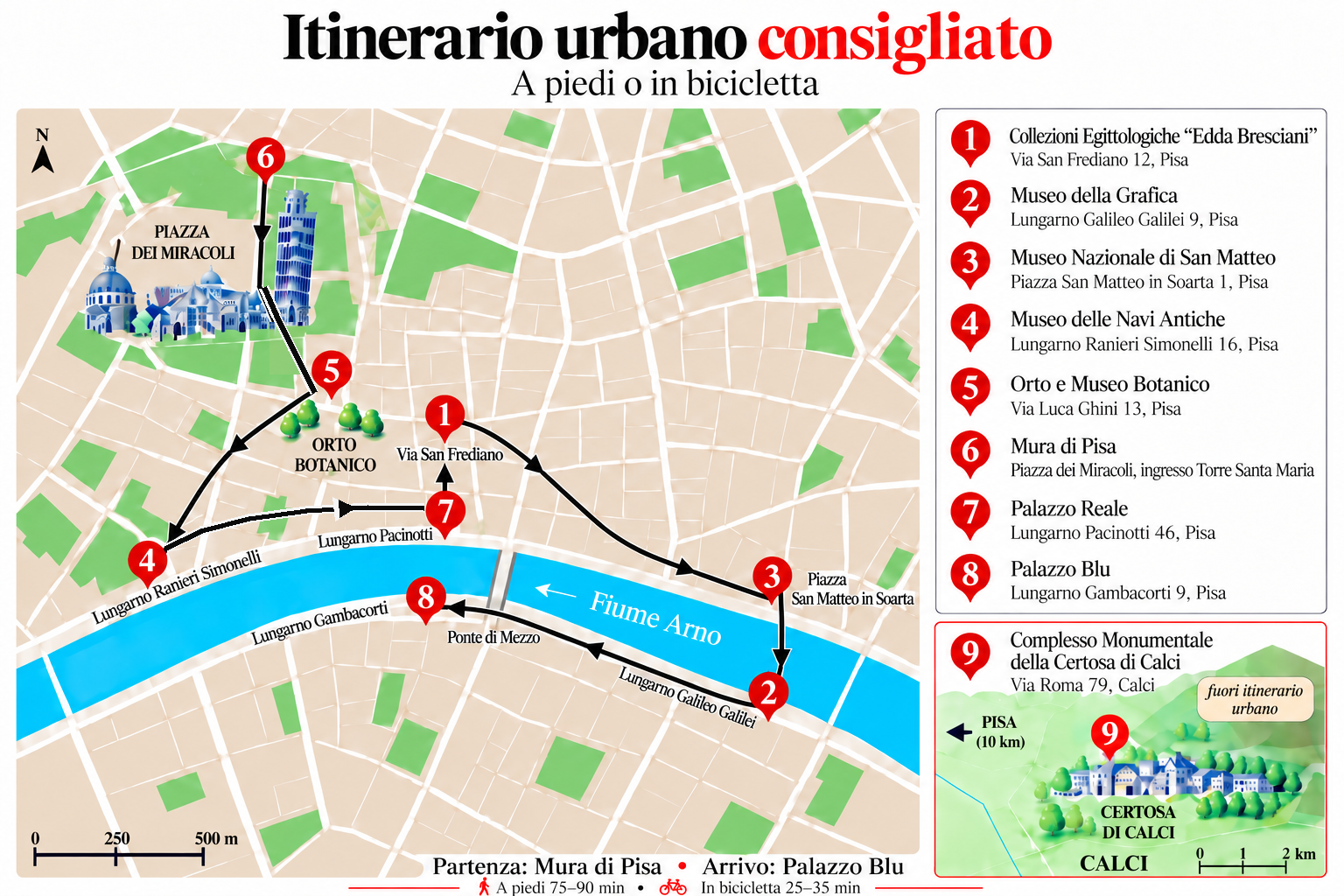
You can organise your visit according to your interests, use the complete location map or follow the suggested urban itinerary on foot or by bicycle.
Before visiting, always check the individual location pages for opening days, opening hours and any specific admission arrangements.
Nine places, many stories and one Pisa Card to discover them all.